Thursday, December 31, 2020

How to set up a home theater with a high ceiling or difficult room size

To help you choose the right speakers, we recommend using Crutchfield’s SpeakerCompare Listening Kit. It includes a pair of studio-quality headphones, and a guide to getting the most out of your session, and a few other necessary items. We’ve carefully chosen the components of this kit to ensure a crystal-clear listening experience. It’s available for a nominal rental fee, and includes a $25 Crutchfield merchandise credit. In your shoes I'd try to mount your rear surrounds on the wall, provided they won't look too out of place cosmetically.

home theater ceiling speaker placement

The height and width of the room have a relationship of 1.618. Here you have to place the sub at your listening position. Then walk around the room with SPL as you listen to a heavy-bass track. Subwoofer placement has flexibility, unlike other speakers.

1.4 - Seven channels plus 4 Dolby Atmos Speakers - Ultimate

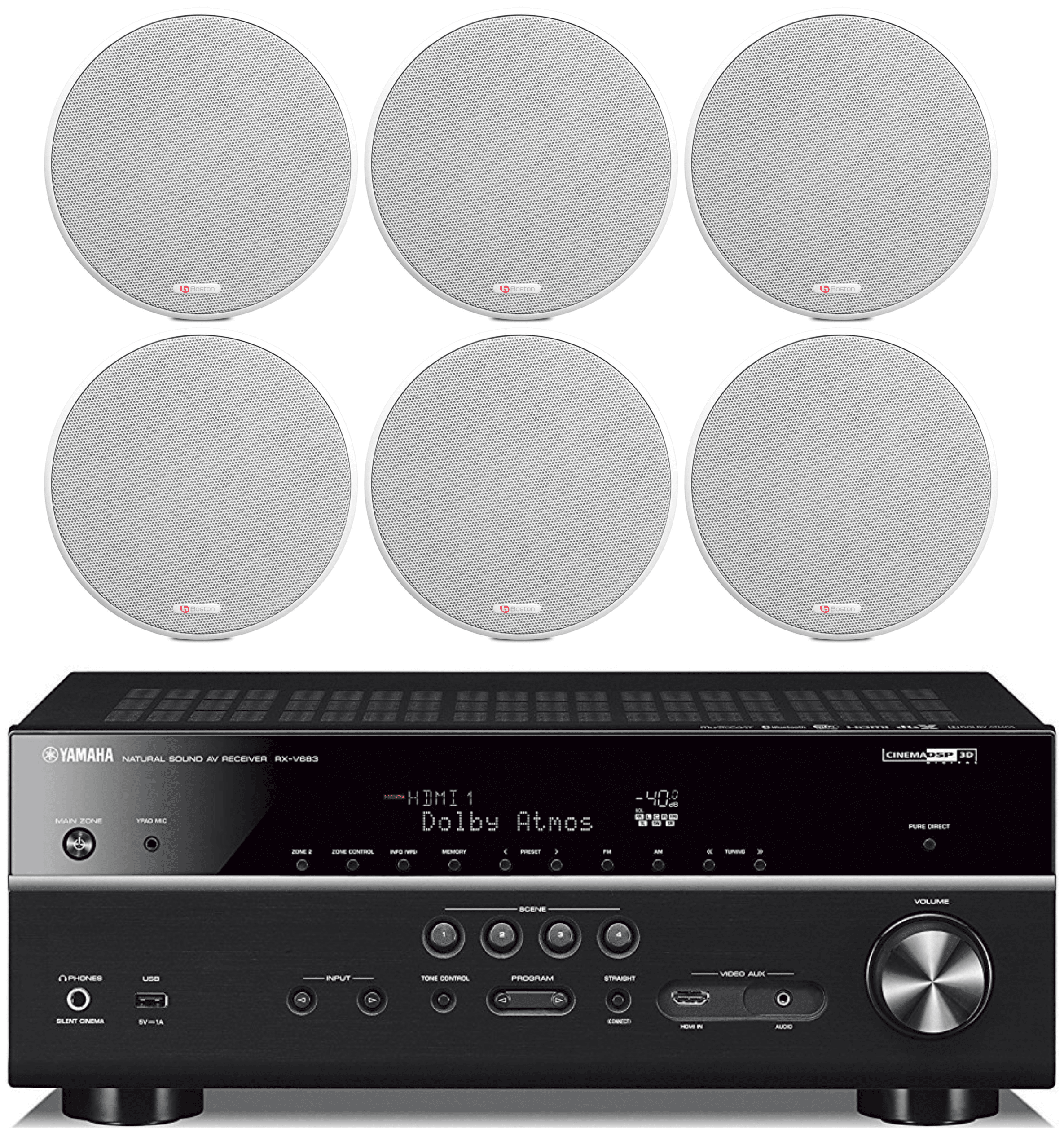
The B&W lineup of speakers that you can build into your walls or ceilings is one of the largest on the market, with a model for just about every possible situation. With their line of in-wall and in-ceiling speakers, B&W also makes DIY installation foolproof. Moving a subwoofer or a floorstanding full-range speaker away from any intersecting room boundary will reduce the tendency to boom or to have too much bass.
home theater ceiling speaker placement

This gives you a wide front soundstage that simulates a theater. Space your ear-level speakers the same distance from each other as they are from you for the best sound. In looking at this example, with the center speaker in the exact middle of the wall, the left speaker should be 67.1” away from the center channel. The right speaker should be precisely the same distance in the opposite direction. We are finishing our basement in the next few months and I need to decide on placement of my in-wall speakers. If I understand you correctly, I’d probably go with in-wall (spaced maybe 8-9 feet apart at most) as the surround back speakers are meant to be more directional than diffuse.

1.2 - Five channels plus 2 Dolby Atmos Speakers - Most Popular

In various tests, it is seen that when the sub is placed 8-12 inches apart from the wall. You can also place it within the first half section in the front of the room near the speakers. Since there is no one rule or a strict formula for speaker placement we have to patiently try some of the well-examined methods and decide which one suits us.

With this type of loudspeaker arrangement, you will get a rich and full surround experience when listening to SACDs, DVD-Audio discs, or any Blu-ray concert DVD that has multi-channel audio. Above all, you want to try and place the seating area equidistant from all of the speakers. That’s not to say that you can’t do this if you simply must have your rear speakers closer to you than your fronts, but ideally, this is the arrangement. If you do need to position your speakers differently, use your AV receiver’s distance and level settings to calibrate your system so that all playback levels are the same. This is a case where we recommend that you raise the side speakers up to help give you more of a full surround effect.

In-wall and ceiling speaker placement and installation

They should be a good complement to each other to create a balanced sound field in your room. Center and pair of front speakers are the most essential, as they play the leading role in sound reproduction. But don’t underestimate the value of other sound devices. Quality equipment is only half the battle for the great sound in your home theater. Remember that even the most expensive speakers without proper placement are a waste of money. Spend a little time figuring everything out, and you’ll get the most out of your entire sound system.

But, your TV looks best when its middle line is at eye level. Install your in-wall speakers at about ear level when seated for the best sound. In a mixed-usage room you want your front and rear in-wall speakers at about ear level when standing.

Receivers do come with a microphone to auto adjust the sound based on their location. Like my Yamaha receiver has its own YPAO mic to auto-calibrates the sound. The mic comes with a long cable, so you just have to connect the mic to the receiver and take it near your sitting area. Make sure that you raise it near your face so that it is aligned to your ear and then start the calibration.

home theater ceiling speaker placement

This also affects the “soundstage” which is how you can locate individual sounds within the stereo image. A good soundstage will let you, for example, point out where the cellist is sitting when listening to a live recording of a quartet. SPEAKER GRILL - Built in round stain resistant speaker grills. Match existing flush mounted designs in your home or workplace for a clean look & achieve wide-range sound performance without compromise. Best 5.1 sound bars for 2023 Can sound bars really do surround sound? And the best ones do it with enough power and finesse to compete with a receiver-based system.

Speaker placement for home theater

Secure them to prevent falling to the side of a ceiling joist, and add the finishing touches such as the grill cover. This can be made easier if you have assistance from a friend, or if you have use of an upstairs or ceiling crawl space. Once the holes are made, start snaking your wires through the hole and running them back to your amp.

This will help avoid the reflection of sound waves from surfaces and, accordingly, achieve a clearer high-quality sound. This means that, most likely, you will not place the speakers at the exact ideal distance. But you can always adjust the receiver settings and get a great sound.

Speaker Placement for Home Theater Surround Sound

It is advisable to place the speakers at the level of your TV or close to the height of your ear to get the optimal result. The distance between each front speaker and the rear speakers should be minimum around 6 feet or equally divided. 9.1.2 – The ultimate home theater setup is just a simple upgrade to an out-of-the-box 9.1 setup. The main right and left speakers will now be firing from overhead with the upgraded double ceiling-mounted speakers on both sides of the system. If you see an additional number that would indicate the number of surround sound ceiling installed speakers directly above the listener.

The right center speaker placement is especially vital for movie watching, as it is responsible for most dialogues. Have you ever wondered why you have black bars at the top and bottom of movies? In this video, we explain everything you need to know about widescreen. If you have a home theater or are thinking about building one, this video will demystify aspect ratios and explain how to design and set up your system to get the best experience possible for new...

Buying Guides

Don’t forget to wear eye protection when cutting into the ceiling. This gives you a chance to measure the locations and ensure each spot is equally spaced around the room. Creates a great “all over” sound profile by adding direct overhead sound. Do not limit the amount of recessed lighting that can be installed. However, this arrangement may need a different speaker configuration or stand-alone adapters to ensure the two systems pair together.

home theater ceiling speaker placement

” Speaker locations are very standardized, except when adding overhead speakers, which is called immersive audio. In this article, we are going to discuss how to figure out exactly where to place your speakers. Because this can get complicated quickly, this article addresses only the placement of speakers for 5.1 and 7.1 surround systems. These two legacy formats matter a great deal because the placement of these speakers is the same when adding immersive formats such as Dolby Atmos. These layouts are the foundation for all movie audio you enjoy in a commercial theater as well as at home. In a future article, we will discuss adding the overhead speakers.

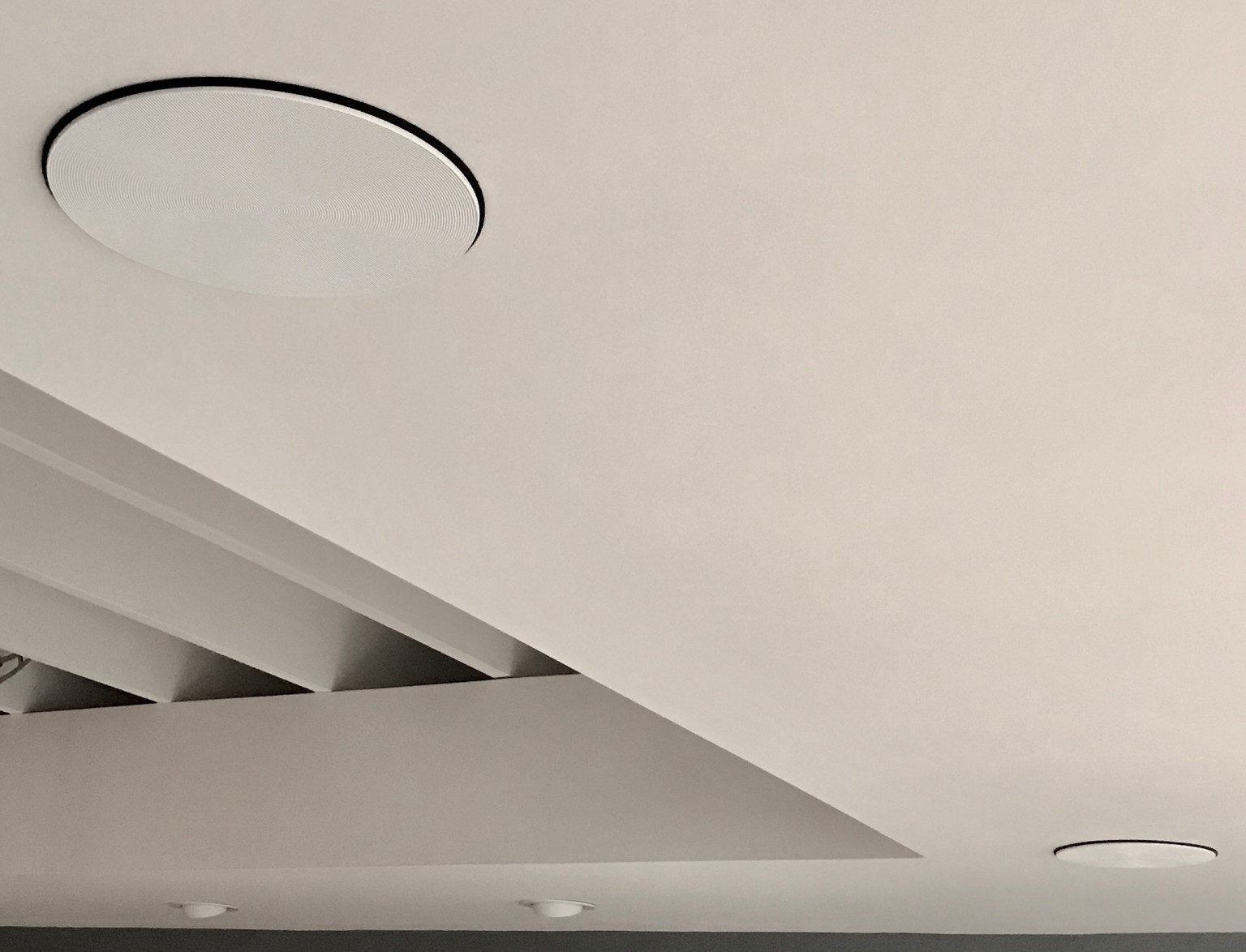
Inbuilt ceiling speakers

Sometimes you want music overhead but have room for just one speaker. A stereo-input speaker, which plays both the left and right channels of your music. The process for accurately laying out your home theater speakers, minus immersive audio, is now complete! If you have followed this process, your speaker layout now meets industry standards and is very similar to how movie studios edit their movies. The process may have seemed complicated or tedious, but once you get it, it is straightforward, yet highly accurate. You can do dipoles, or you can mount small bookshelf speakers and face them towards each other for a more diffuse sound behind you.

home theater ceiling speaker placement

Guide on how to choose the ideal in-wall and in-ceiling speakers for your home theater or media room. This guide will give you some insight into different types of built-in speakers and the best use case for each one. While some of these are great for music listening, we focus on how to pick the best in-wall & in-ceiling speakers for your home theater system. For multipolar surrounds or direct-radiating speakers used as surround speakers, the same angles and placement suggestions apply.

Preparing for the installation

These types of racks have been used for decades in data centers, studios, concert halls, and high performance home theaters. We like them because they are very easy to service and make changing things out as you upgrade super simple. Although hanging acoustic panels in a home theater or listening room is not too difficult, it does require a little thought & planning. In this video, we show you two effective methods we use here at Audio Advice that are easy for the average DIYer. This tip is designed to help you perfectly focus your projector and is part of our Top 5 Tips For Improving Your Home Theater Video series.

When considering a subwoofer for your home theater or listening room, there are a lot of factors to consider. We are often asked about the difference between sealed and ported subwoofers, and which they should choose for their room. One of the best ways to house your gear is in a commercial-like equipment rack.

Set Up And Calibration

Learn how to build an elite home theater without any footprint. Your surround speakers should be spaced about the same distance apart as the front left and right speakers. We recommend installing in-wall and ceiling speakers at least inches away from an adjacent wall or ceiling. Say you’re entertaining in your living room, and want to play music for your guests. You want your front and rear in-wall speakers at about ear level when standing.

Once you have decided on a spot for your speakers, ensure the area is near a stud and mark the location with your pencil. Try to install the speakers in such a way that the placement complements existing lighting fixtures or climate control vents. Ceiling speakers should create a good cover of sound throughout the room, so central placement is best. In some cases, yes, ceiling-only speaker installation can fall short depending on what you listen to. Pairing can be done with multi-channel amplifiers or control boxes, depending on your preferences. In some cases, using a soundbar can also work when you want to combine a small number of speakers together.

The main thing is that it should stand stably on a flat surface. As more original Dolby Atmos movies continue to come to streaming platforms, you will not want to choose upgrades for your home theater system until you watch our next video. Since you already own most of the key parts, you won’t even have to change that many components! We will cover essential tips & tricks to get great-sounding uncompre... Imagine you are really getting into a great action movie, the spaceship lands, and all of a sudden, you hear this terrible buzzing or rattling sound coming from somewhere in your room. This tip breaks down how to find and eliminate noises your room might be making due to vents, furniture, li...

home theater ceiling speaker placement

Cut along the line with a drywall saw to carve the cutout. Cutting into drywall and plaster creates a fair amount of dust. Cover any furniture near your installation before you begin your work. It’s helpful to have someone hold the vacuum hose under the drywall saw as you cut. This eliminates a lot of the dust clouds that are generated during installation.

Speaker placement in a dedicated theater room follows the same guidelines as above, except for the speaker height. Since you're not using the room for anything else, you want each speaker at ear level when seated. The best way to get a feel for the types of speakers which work best for in-wall and in-ceiling installation is to check out Cmple’s selection of 2-way surround sound speakers. They are available in round and rectangular sizes, with Kevlar or IMPP cone woofers, and titanium, Mylar or silk dome adjustable tweeters. They are all engineered for outstanding sound reproduction, at extremely reasonable prices.

15 Best Temporary Hair Dyes Temporary Hair Color Spray

Table Of Content Kryolan UV Dayglow Spray Pravana Chromasilk Vivids Pink Klorane Sun Lightening Spray dpHue Gloss+ Why Trust PEOPLE? How to ...